Reading Resources
You don’t need a lot of supplies to teach your child to read. But along the way, I found a few books, tools, and other resources that made learning a little easier and more fun. I’ve gathered my favorites here, organized by reading stage.
Learning to Sound Out Words
When I was first teaching my daughters their letters, all we really needed was a good set of letter flashcards. Then, when we moved on to blending sounds, having a nice compact whiteboard and a set of colorful dry erase markers really helped.
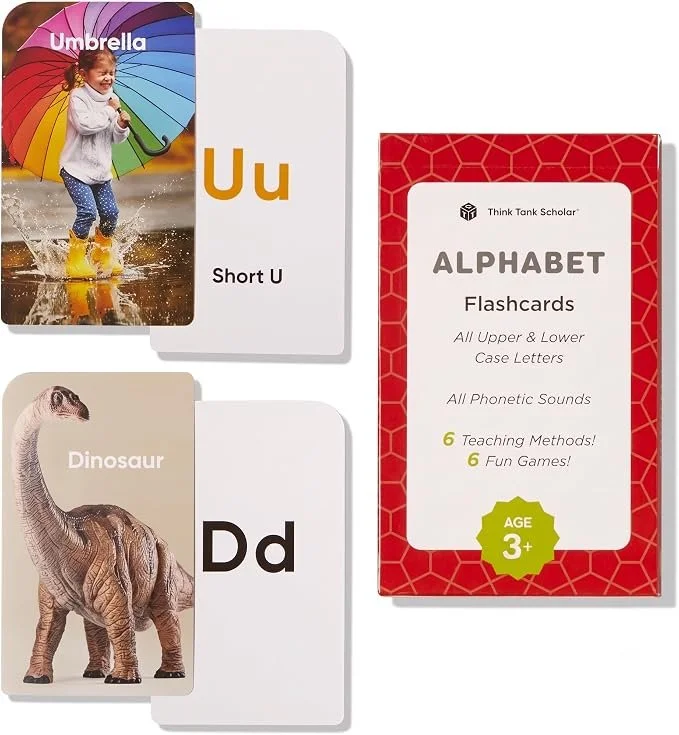
Think Tank Scholar Alphabet Flashcards
This set has everything I look for in alphabet flashcards. Each card shows both the uppercase and lowercase letter. There are no pictures on the side showing the letters, so your child has to recognize the letter without a visual clue. And the pictures on the other side are based on the letter sounds, which makes them useful for practicing phonics.
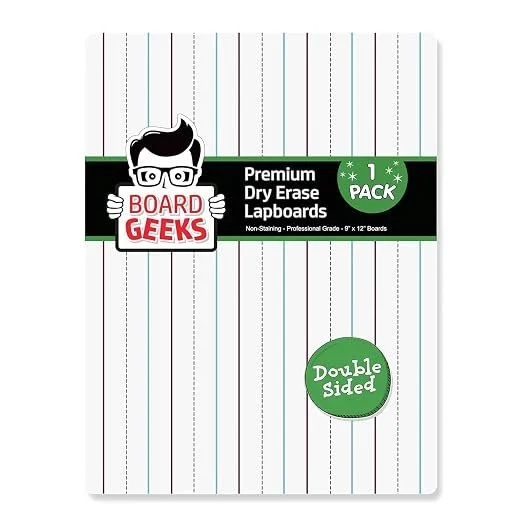
Board Geeks Dry Erase Lapboard
I used this dry erase board with both of my daughters. The compact size made it really convenient to use. Even once we were reading books, I could just grab it if they needed extra help sounding out a word. It also erases really well.
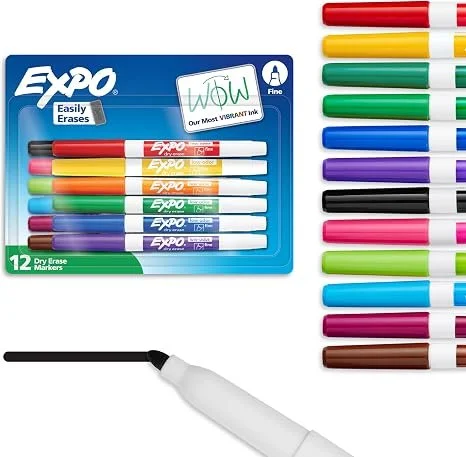
EXPO Fine Tip Colored Markers
Our favorite markers. They write well, and the fine tip makes it easier to write longer words on the whiteboard. And although it's a simple thing, both of my kids loved picking out which color marker we used for our lessons.
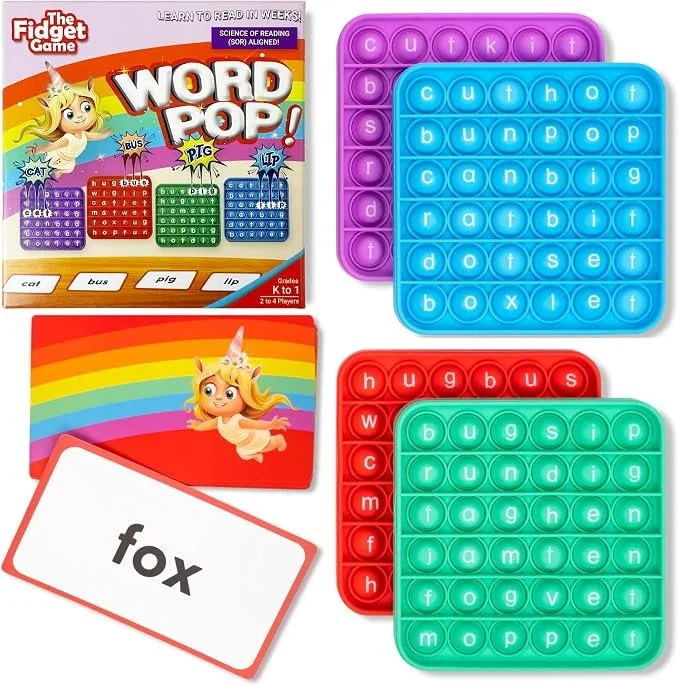
Fidget Game: Word POP!
I haven’t tried this game myself, but it does seem like a fun way to get in some extra practice with CVC words. Kids pop the letters on the fidget mats as they sound out the matching word. If it makes reading practice more exciting for your child, it could be a nice additional tool.
Learning to Read Books
When my daughters were first learning to read, all we really needed was a good set of decodable books.
So what makes a set of decodable books successful?
First, it needs to be truly phonics-based. As much of the text as possible should be decodable, rather than relying on kids memorizing whole words.
The books should also get progressively more difficult. Each book should be only a little harder than the one before it. That keeps the challenge manageable without becoming too frustrating.
And finally, you want books your child will actually be excited to read.
This last part can honestly be tricky with decodable books. When your child can only read a limited number of words, there's only so much an author can do to create an engaging story. But fun illustrations and compelling characters can make a big difference.
If your child likes the books and is excited to read them, they're much more likely to look forward to your reading lessons.
I'm going to share the two sets I personally used and can vouch for. But these are also the things I'd look for when deciding whether any other set of decodable books is a good fit for your child.
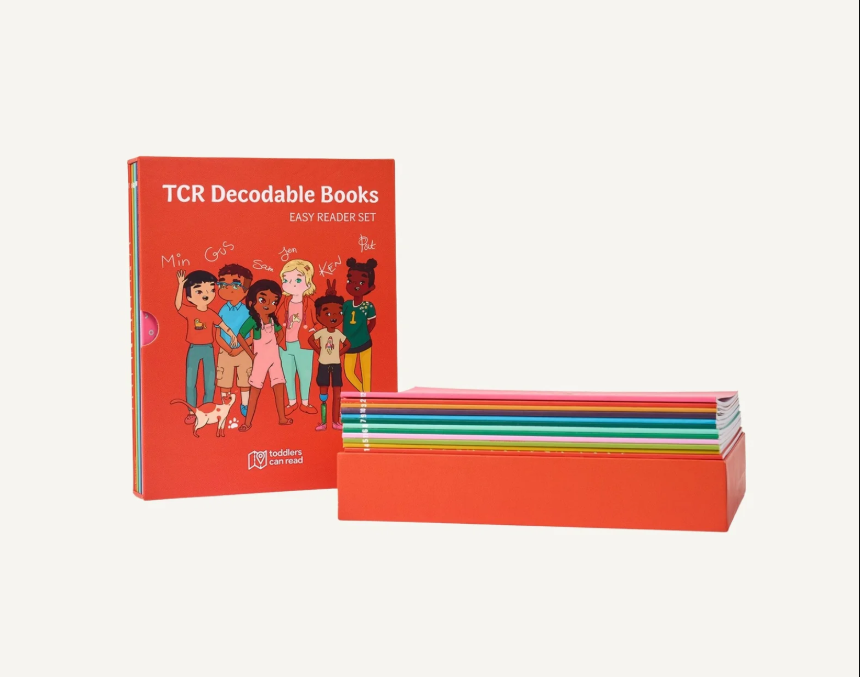
TCR Decodable Books
I used the Toddlers Can Read Easy Reader Set when I was teaching my oldest daughter to read. She loved these books, and we read them many times.
At the time, they only had one set. They now also sell a Beginner Reader Set, which is more challenging. When my oldest finished the Easy Reader Set, we moved straight into I Can Read! books, and that transition was a little tricky.
So when I was teaching my youngest, I bought the Beginner Reader Set too. These books helped bridge that gap and made the transition to leveled readers much easier.
Personally, I recommend getting both sets. They're also sold together as a bundle.
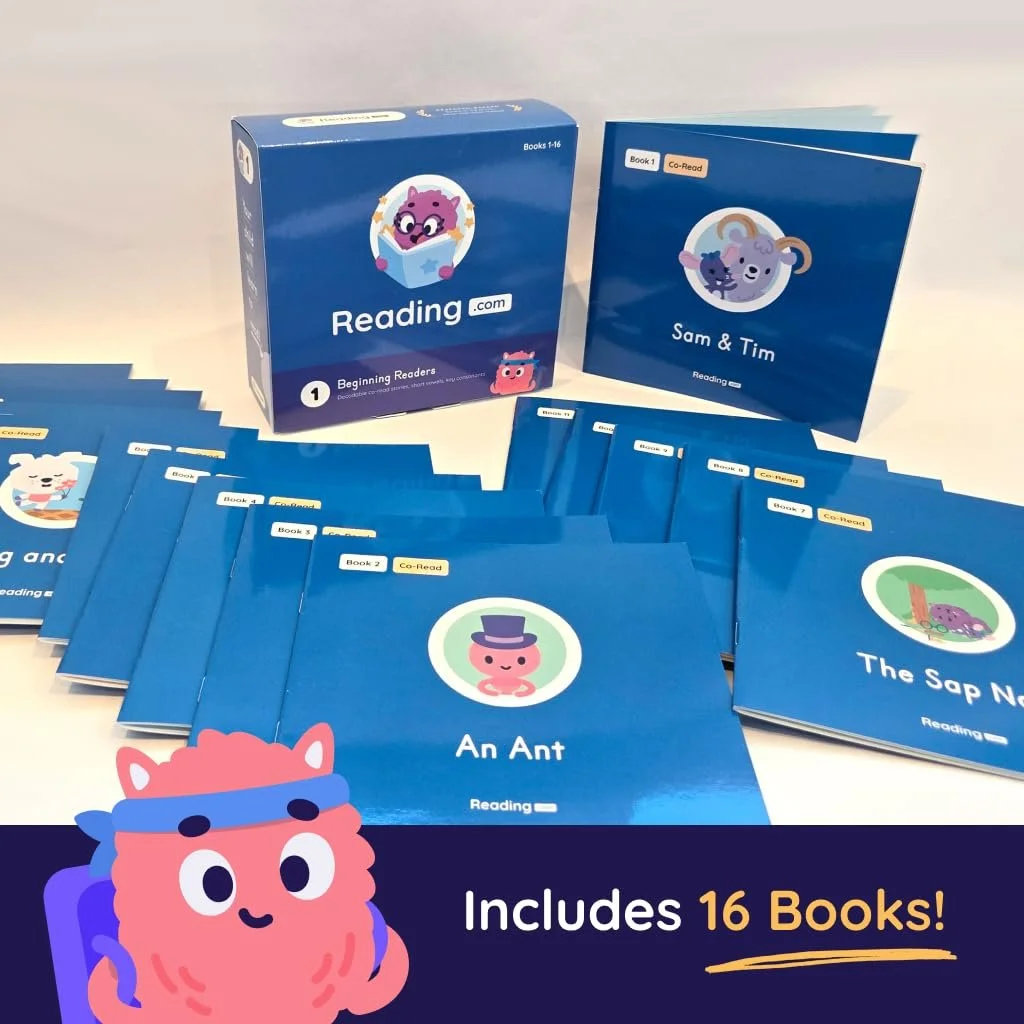
Reading.Com Beginner Readers Collection
When I was teaching my youngest, she was already familiar with the TCR Easy Reader Set because we'd had it for her sister. She knew the stories so well that it was sometimes hard to tell whether she was actually sounding out the words or had simply memorized them.
Because of that, I started adding in some of the books from the Reading.com app. One thing I really liked about the early books is that they're designed to be co-read. The parent reads part of the story, and then the child reads an easier section. It helps keep the stories interesting, even when your child can only read a handful of words.
My daughter loved these stories and was always excited to keep reading. I mostly like the app (read my full review here), but you can also buy physical copies of all the books from the app. I recommend them even if you don't use the app, because they're genuinely great early readers.
The books come in four packs that gradually get harder. The first (blue) set is designed to be co-read, and after that your child reads the books on their own. You can buy each pack individually or get all four together as a bundle.
Becoming an Independent Reader
When my daughter had read her final decodable book, I knew she was ready to start some leveled readers. And at this point, it was also helpful to have a set of advanced phonics cards around for some of the new phonics patterns she was starting to come across.
When it comes to leveled readers, I personally prefer the I Can Read! books from HarperCollins. I just find that the stories tend to be a little better than similar beginner readers like Step Into Reading.
Step Into Reading has a lot of books featuring familiar characters, like Marvel superheroes or Disney Princesses, and sometimes I feel like the stories built around those characters can be a bit forced. But that said, if a book about your child's favorite princess gets them excited to read, then it's absolutely worth it. You know your child best.
Just like with decodable books, I tried to start with the easiest leveled readers and gradually work our way up. You don't want every new book to feel like a huge jump from the one your kid just finished.
I'm going to share some of our favorite I Can Read! books at each level, along with a few other books we liked along the way.
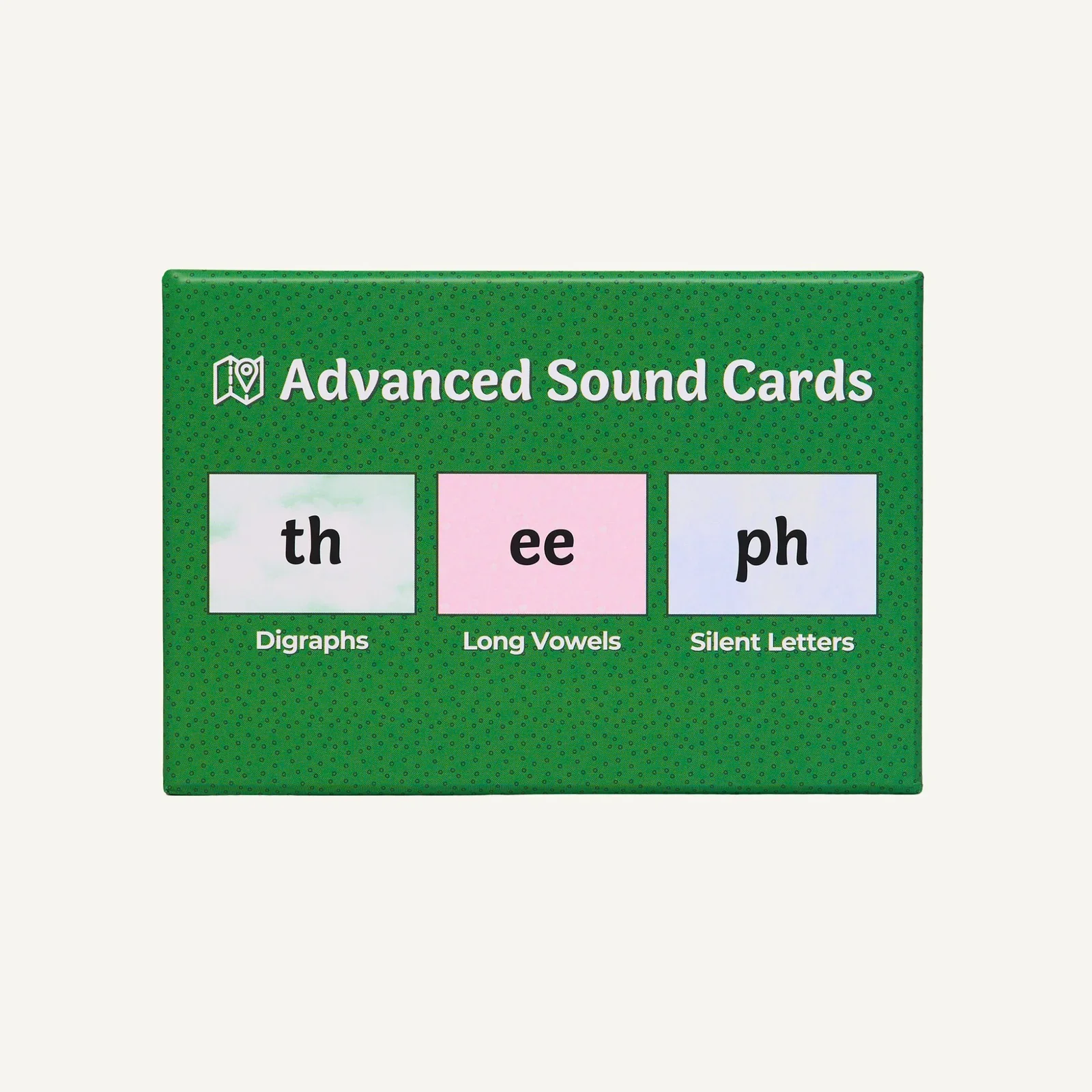
TCR Advanced Sound Flashcards
I used these flashcards when I was teaching my youngest to read. With my oldest, I just made my own cards whenever we ran into new tricky sounds. That works perfectly fine, so you definitely don’t need to buy a set. But I did enjoy having these around, and I don’t regret buying them.
First Leveled Readers
The first I Can Read! books you try should be around Guided Reading Levels D–F. At this level, we really loved the Fox books by Corey R. Tabor. We also loved the JoJo books, which feature Fancy Nancy's little sister.
I haven't personally tried the Biscuit books about the puppy, but they seem to be around a similar level of difficulty.
Pete the Cat and Elephant & Piggie can also be great at this stage, with one important caveat: make sure you're choosing some of the easiest titles in these series. The difficulty can vary quite a bit from one book to another, and some will be too challenging for a child who's just starting leveled readers.
The nice thing about finding a series your child connects with is that they'll be excited to read more of the books. And that's especially helpful early on, because beginner readers need lots of practice to become more fluent.
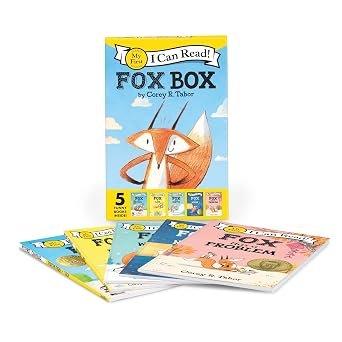
Fox Box by Corey R. Tabor
We loved these books so much. The art is adorable, and the stories are silly and charming. This box set is especially nice because it includes books at a range of difficulty levels. Fox Is Late is a great one to start with because it’s one of the easier books in the set.
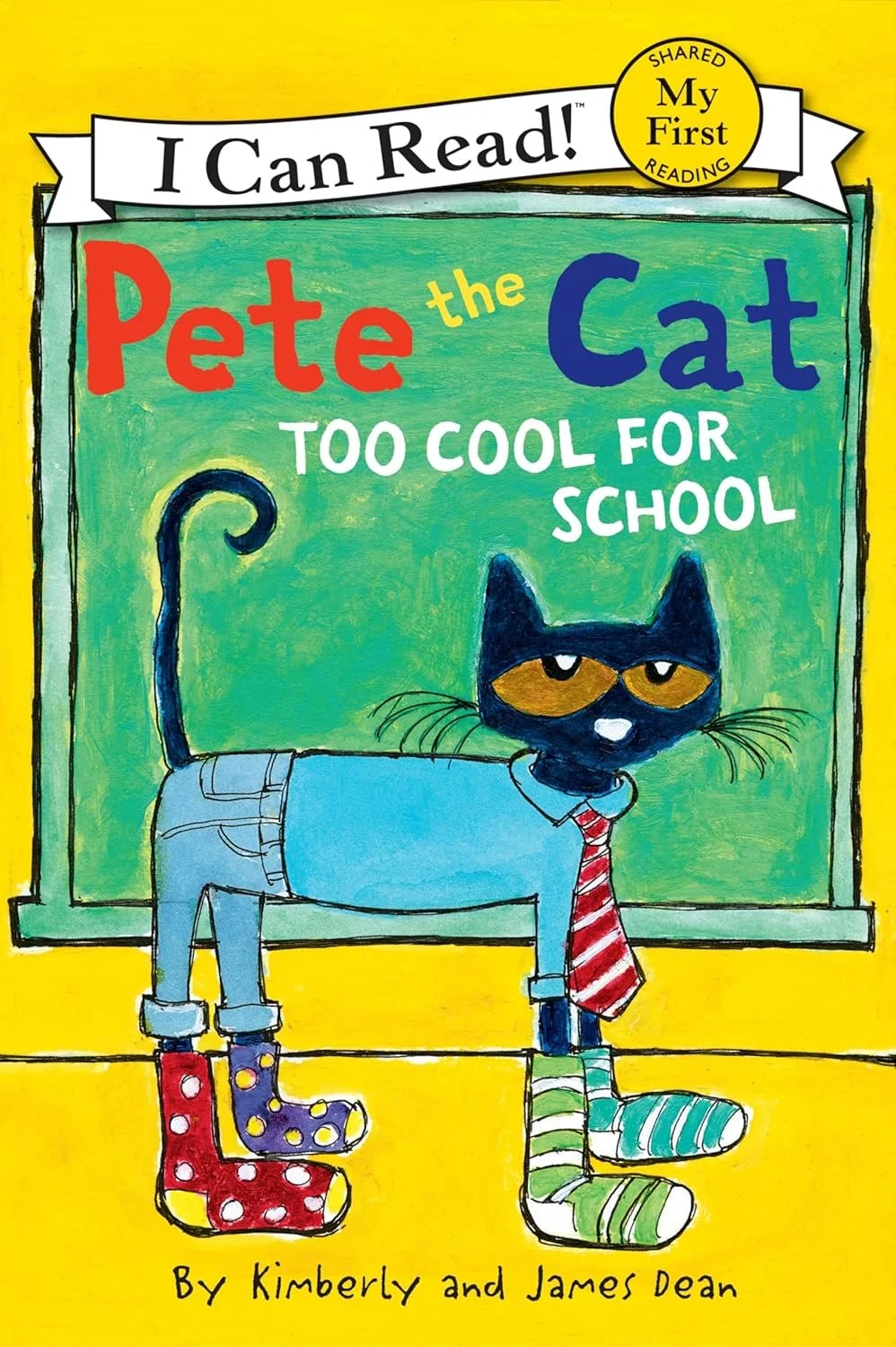
Pete the Cat: Too Cool for School
If your child loves Pete the Cat, this is a good title to start with. It's one of the easier Pete the Cat readers (Guided Reading Level E), with simple text and plenty of pictures. Just keep in mind that the Pete the Cat books vary quite a bit in difficulty, so I wouldn't assume every “My First” Pete book will be equally easy.
Growing Readers
When my daughters were growing readers, they really loved Pete the Cat. At this point, I generally looked for books around Guided Reading Levels G–I, although I always paid more attention to the actual book than the level printed on it.
They were now ready for a Pete the Cat box set with a mix of books, including some that would have been too challenging earlier on.
This was also when they started reading more Elephant & Piggie books. Kids tend to find these books really funny, and there isn't too much text on each page, so they don't feel overwhelming.
You can also start introducing some easier Dr. Seuss books, such as Hop on Pop and Green Eggs and Ham. Green Eggs and Ham is longer, but the repetition makes it surprisingly manageable for a growing reader.
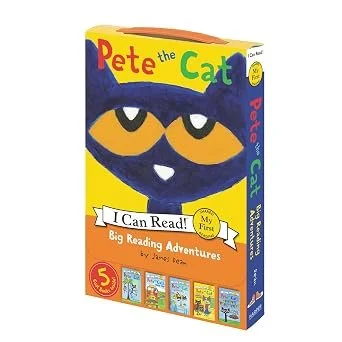
Pete the Cat: Big Reading Adventures (box set)
We had this exact box set, and both of my daughters loved it. The stories and pictures are fun, and they enjoyed them enough to read them again and again.
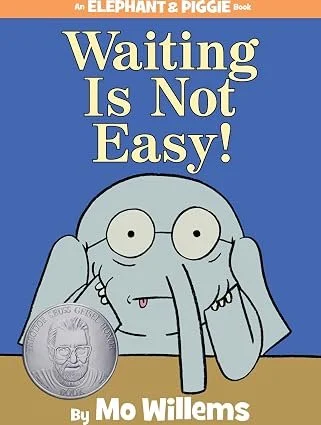
Waiting is Not Easy! - An Elephant and Piggie Book
We had this Elephant & Piggie book, and both of my daughters thought it was really funny. There isn't too much text on each page, and the pictures help keep the story engaging. It's a great choice for a growing reader who's ready for something a little more challenging without having to tackle pages full of text. And if your child likes it, there are plenty more Elephant & Piggie books to try.
Ready For a Little More Challenge?
Once these books are becoming easy, try some longer readers like Little Bear or Danny and the Dinosaur before moving on to the next stage.
More Confident Readers
Around this point, I generally looked for books around Guided Reading Levels J–L. The books started feeling more like “real” stories. The pages had more text and a bigger variety of words. And because of that, the stories could also become more interesting.
We really liked the Penny books by Kevin Henkes. If you’re familiar with his mouse picture books (which are lovely), these have the same art style and mouse characters, but with easier language for a beginning reader.
We also loved the I Can Read! Food Group books by Jory John and Pete Oswald. The little food characters are so silly and fun.
This was also a good time to start reading the Frog and Toad books. These stories are a bit longer, but the words shouldn’t feel too tricky.
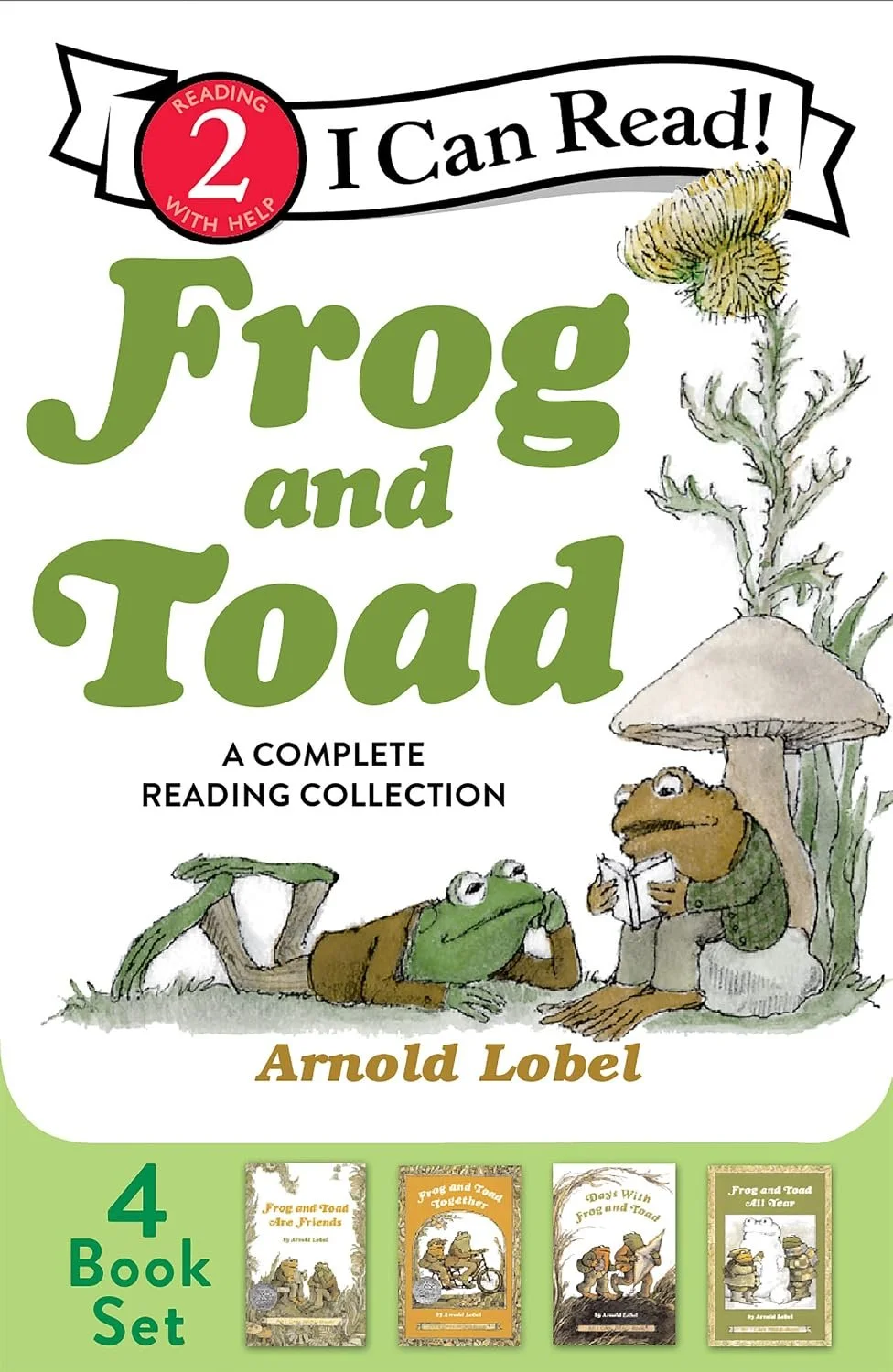
Frog and Toad Box Set
Frog and Toad is a classic for a reason. I remember reading and loving these stories back when I was a kid. And when we got this set, it was a huge hit with both of my daughters, too. Don’t skip over this one.
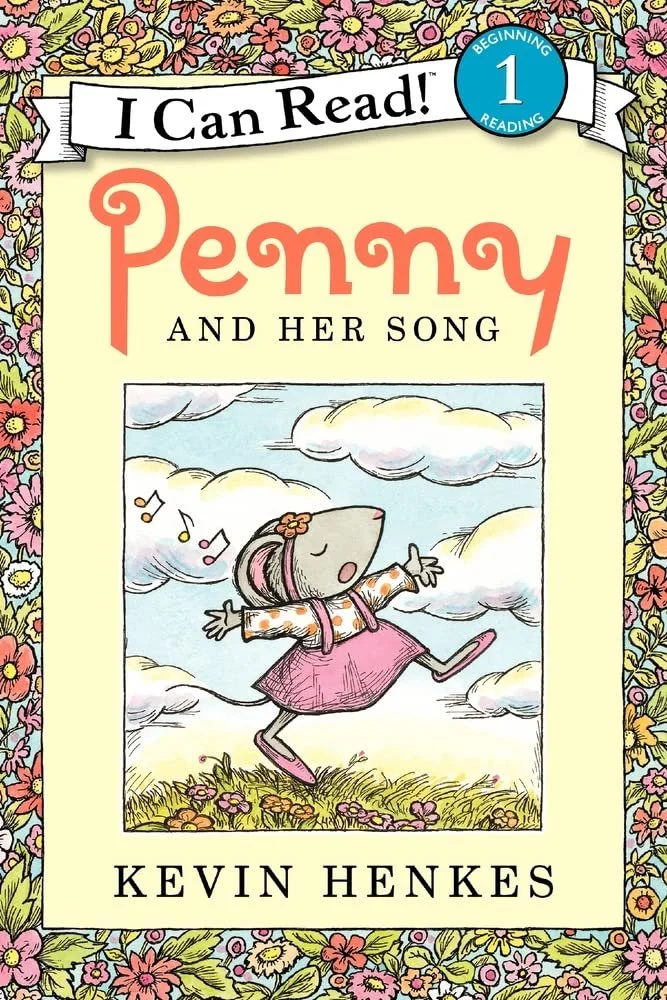
Penny and Her Song
This book is the first of four Penny books by Kevin Henkes. They’re all very sweet and charming. Penny and her family are really adorable. I loved reading these with my daughters.
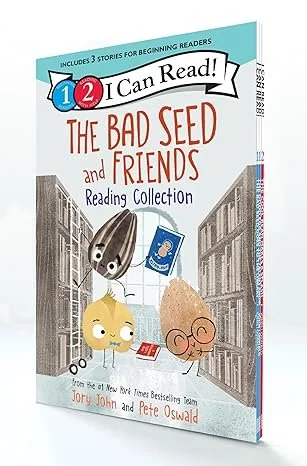
The Bad Seed and Friends Reading Collection
This is a great set if your child likes the Food Group books. I also like that the books build in difficulty. The Cool Bean Makes a Splash is the hardest of the three, so I’d save that one for last.
Don’t Forget About Picture Books
Once my daughter became a more confident reader, she started picking up books to read on her own for fun. And at this point, I realized we already had a lot of books on our shelves that she could read. You don’t need to stick to leveled readers anymore.
This is a great time to go through the picture books you already own and try some of them out. There are so many wonderful picture books for kids, and it would be a shame to skip over them on the way to chapter books. You may be surprised by how many old favorites your child can now read for themselves.
If your child liked the Food Group readers, you can try some of the full picture books with those same characters. Dragons Love Tacos and Creepy Carrots! are also really fun choices. They have more words than the early readers, but they’re funny, interesting stories that kids actually want to read.
And this is a good time to pull out some of the harder Dr. Seuss books, too. If your child read something like Green Eggs and Ham earlier, they may now be ready for The Cat in the Hat.
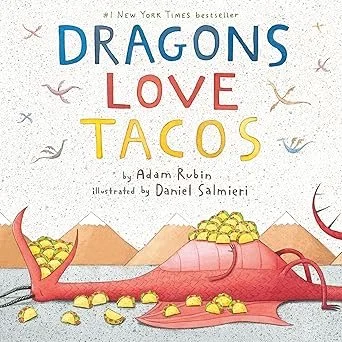
Dragons Love Tacos
This is a really silly book, and both of my kids absolutely loved it. The dragons love tacos, as long as they’re not too spicy... 🌮🐉 It’s funny, the illustrations are unique, and it’s just a great book for kids to read on their own.
Getting Ready for Chapter Books
At this point, I generally looked for books around Guided Reading Levels M–O. One thing I noticed when I started looking for I Can Read! books at Levels 3 and 4 was that there weren't nearly as many to choose from.
Earlier on, when my daughter was reading Level 1 and Level 2 books, she needed lots of practice to build her fluency and become familiar with common words. Luckily, there were plenty of books at those levels.
Now the selection of leveled readers was smaller, but it didn't matter as much. She was ready to read more of the picture books we already owned. This is a great time to just pick out some picture books you think your child will like and give them a try. There's so much more they can read now!
That said, I did find it useful to have a few Level 4 readers. They're designed to bridge the gap between leveled readers and chapter books, and they gave my daughter a chance to get comfortable with longer stories before making that jump.
So I'll share a few of our favorite books for readers at this stage.

Volcanoes! Mountains of Fire
This is a Step Into Reading nonfiction book about volcanoes. Step Into Reading actually has more books at this level than the I Can Read! series, including a nice selection of nonfiction.
This is also a great time to start exploring books that aren’t stories. Think about what your child is interested in, whether that’s space, dinosaurs, volcanoes, animals, or something else, and look for books about those topics.
One thing to keep in mind: Step Into Reading uses a different leveling system that goes up to Step 5. So a Step 4 book like this one is roughly comparable to a Level 3 I Can Read! book.
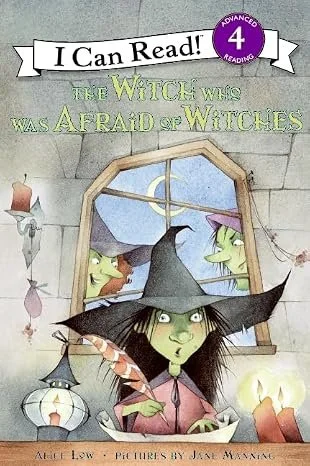
The Witch Who Was Afraid of Witches
The Witch Who Was Afraid of Witches is a story about a young witch who learns to be brave and face her fears. Along the way, she earns the respect of her older sisters, who aren’t particularly nice to her at the beginning.
The story is divided into short chapters, which makes it a nice transition to reading a first real chapter book. Both of my daughters really enjoyed this one.
What About Graphic Novels?
Graphic novels can be a lot of fun for young readers. Books like Narwhal and Jelly and Dog Man are funny and engaging. Having lots of pictures on each page can make them feel more approachable for young readers.
But I do think it's a good idea to encourage kids to read a mix of books. Graphic novels usually have fewer words on each page, shorter bits of text, and lots of pictures helping to tell the story. For a kid who's intimidated by pages with longer paragraphs, they can feel a lot easier.
And sometimes, that comfort turns into avoidance. A child may happily read the graphic novel version of a series, such as Magic Tree House or The Baby-Sitters Club, but refuse to try the traditional chapter books because they feel too hard. If you notice this happening, I wouldn't take away the graphic novels. I'd just make sure they aren't the only books your child is reading.
Keep offering traditional chapter books too, but make sure they're easy enough for your child to read successfully. For a kid who's intimidated by longer books, I'd really prioritize easiness. You want them to get through those pages of longer text and think, I can do this. As they get more experience reading books like that, all those words on the page should start to feel a lot less intimidating.
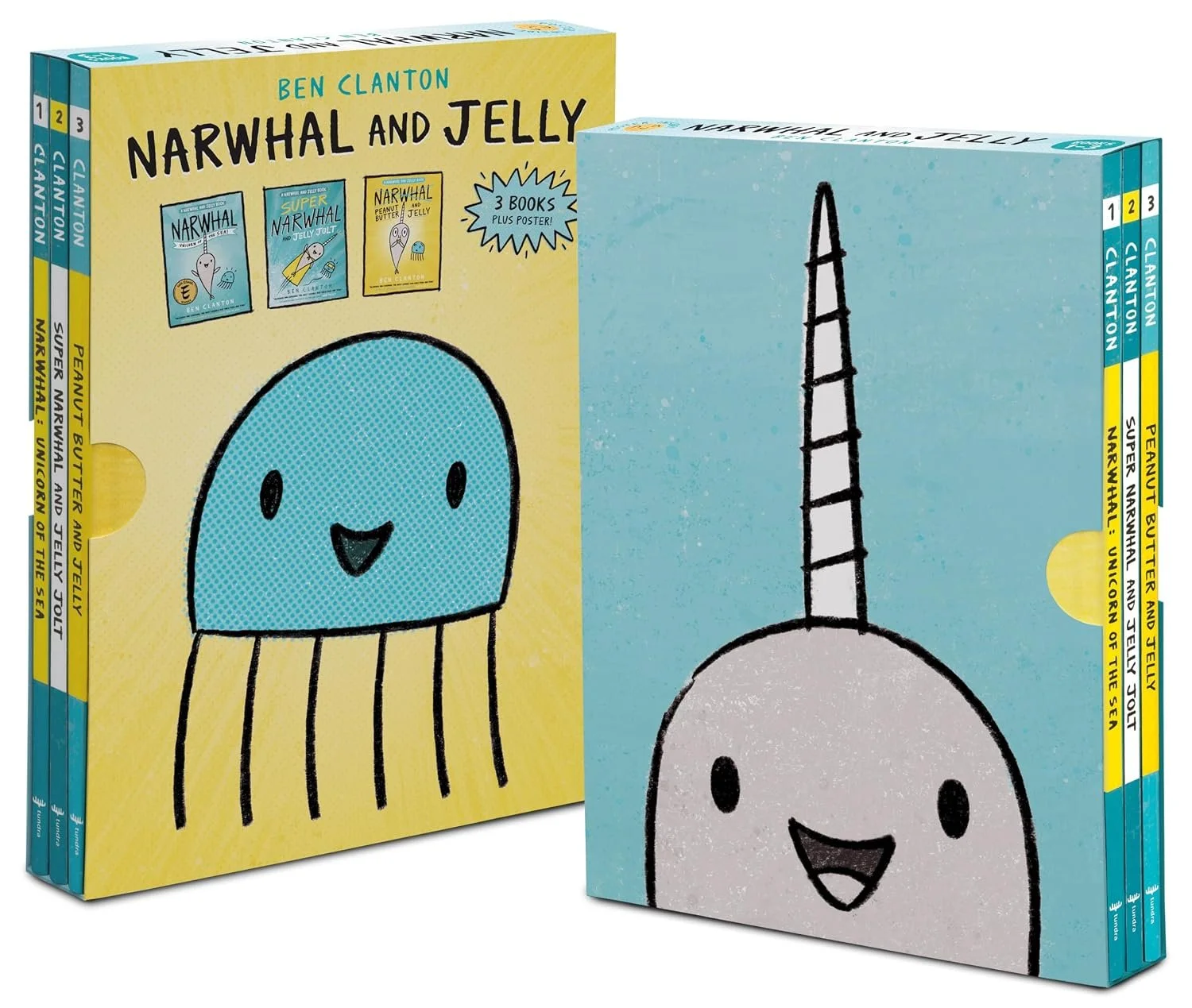
Narwhal and Jelly Box Set
We owned this Narwhal and Jelly box set, and both of my kids loved it. The books are silly and fun, with lots of pictures and short bits of text that make them easy to read. They’re a great introduction to graphic novels, and the box set gives your child several books to keep reading if they connect with the characters.
Early Chapter Books
Once your child is comfortable with longer readers, they’re ready to start trying some early chapter books. For those very first books, I’d look for something pretty easy. A chapter book is already going to feel like a big step, so you want that first experience to go well.
Owl Diaries is a great place to start. The books have large text, lots of colorful illustrations, and fairly short chapters. They really feel like chapter books, but they’re still very approachable for a kid who is just getting started.
After that, we really liked Wallace & Grace. These still have plenty of pictures and short chapters, but they’re a little closer to what you probably picture when you think of a traditional chapter book.
Mercy Watson and The Princess in Black are also wonderful early chapter-book series. I found these to be pretty similar in difficulty, so I’d pick whichever one you think your child will be more excited to read.
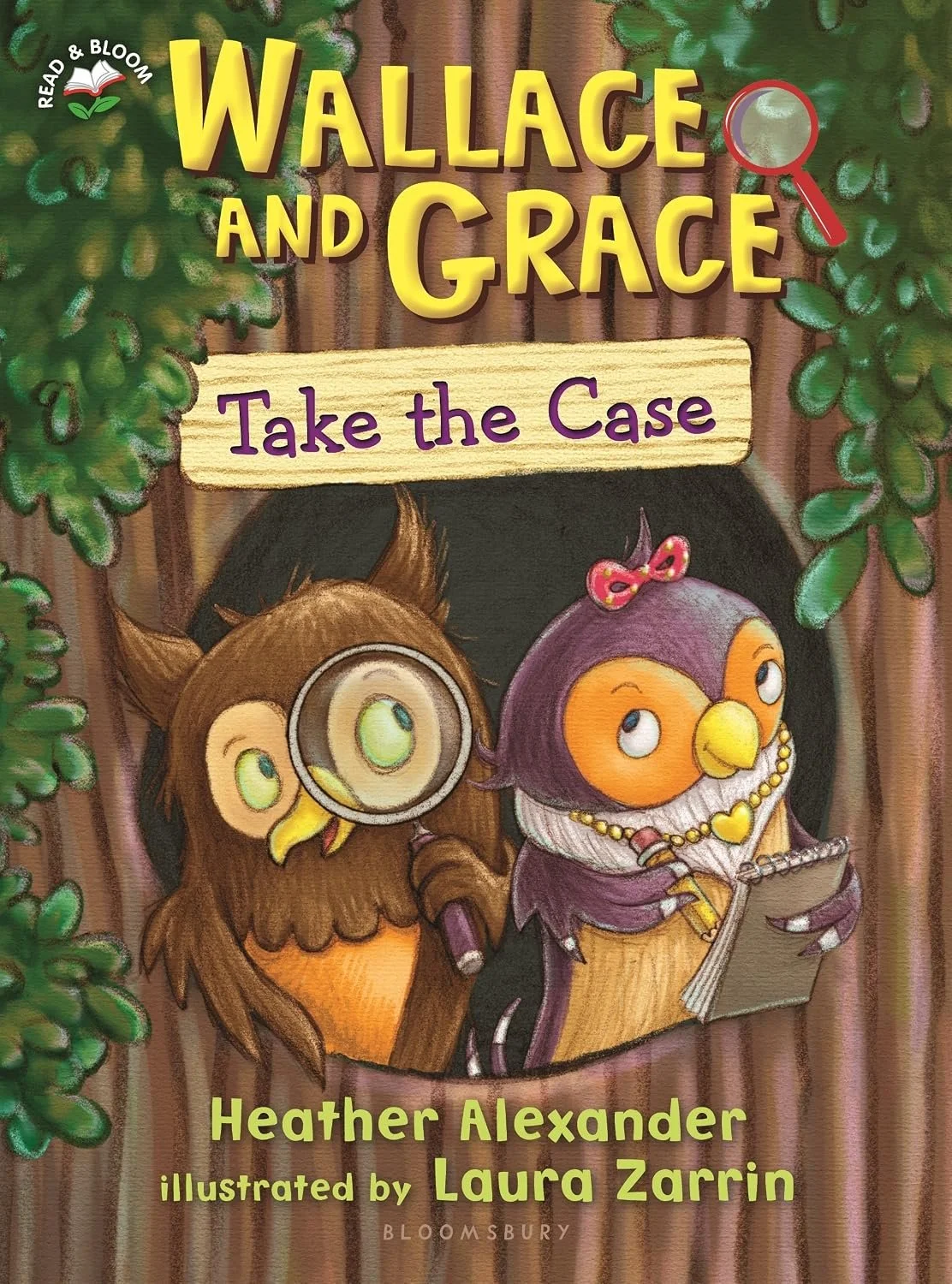
Wallace and Grace Take the Case
This is the first book in the Wallace and Grace series, which follows two owl detectives as they solve simple mysteries for their animal friends. The stories are sweet and a great fit for young kids. When we got this book, it was already a bit too easy for my oldest daughter, but she still really enjoyed reading it. And my youngest liked having us read it to her, too.
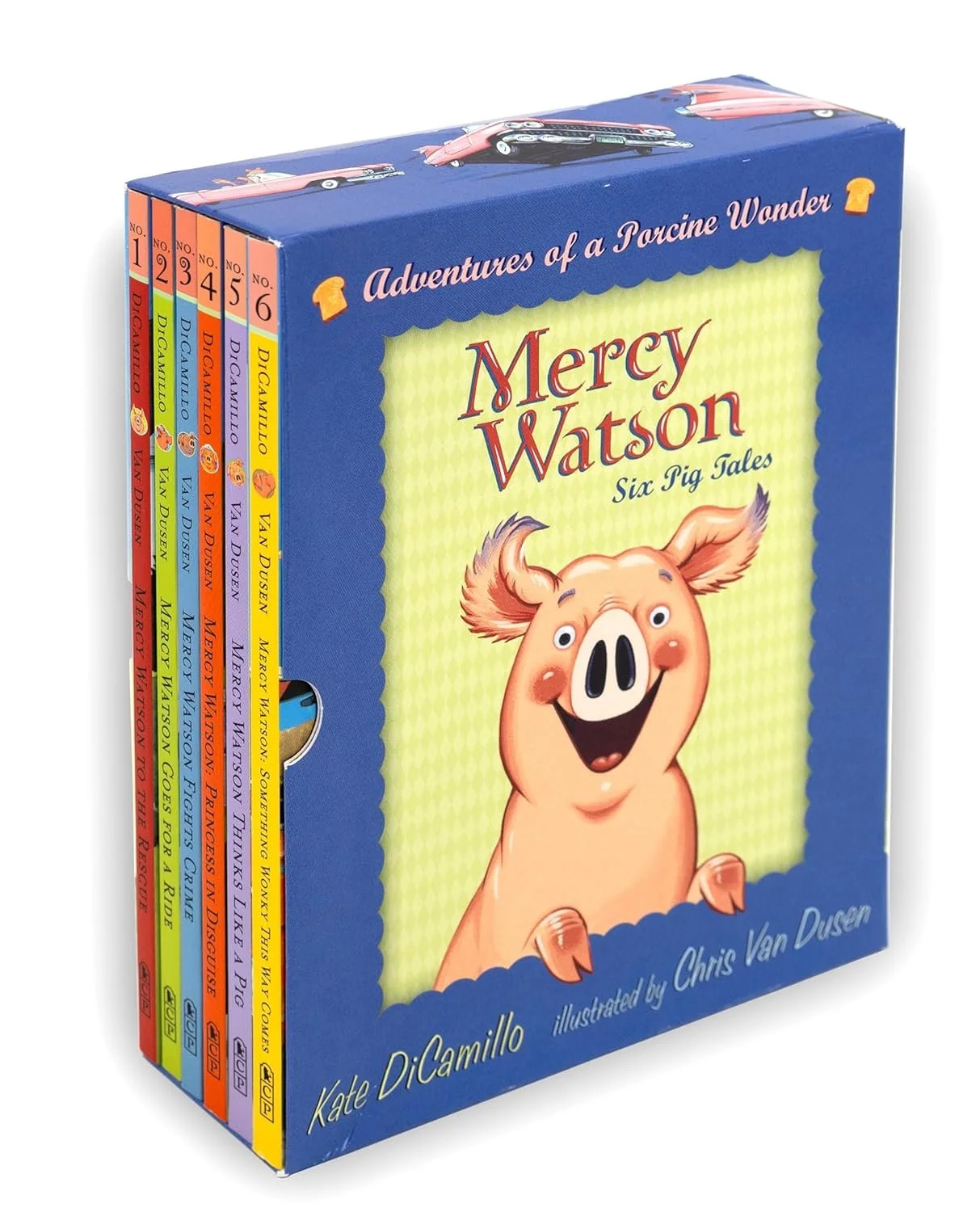
Mercy Watson Boxed Set
For a long time, my kids were absolutely obsessed with Mercy Watson. My oldest would read the books all the time and still ask us to read them to her, too. My youngest loved hearing the stories and asked for them often. I truly lost count of how many times we read these books because they were such a favorite in our house.
If you’re unfamiliar, Mercy Watson is a silly, toast-loving pig who gets into all sorts of misadventures.
Ready for More?
Once those first chapter books are starting to feel easy, you can try some books that are a little longer and have more text on each page. I still liked books with plenty of illustrations, but they didn't need quite as many pictures as those very first chapter books had.
My daughter really enjoyed series like Mermaid Tales, The Never Girls, and Stella & Marigold. These books gave her a chance to get used to reading more text, while still being short enough that they didn't feel overwhelming.
If your child loved the original Mercy Watson books, this is also a good time to come back for Mercy Watson Is Missing! It's much longer than the first six books, and the vocabulary is noticeably harder. I remember having to help my daughter read schadenfreude and then explain what it meant. 😅 But she was excited to read another story with characters she already loved.
You'll probably notice that a lot of these recommendations reflect my daughter's interests (she likes fairies, unicorns, princesses, etc…). If your child is more excited about dragons, monsters, or adventure, Dragon Masters and The Notebook of Doom are two other series to check out. I haven't personally read these with my kids, but they're designed for kids who are starting to feel comfortable with chapter books and still have plenty of pictures along the way.
Established Chapter Book Readers
Once your child has read plenty of early chapter books, they’ll be ready to try some books that look a lot more like traditional novels. There are fewer pictures and more words on each page, but I still looked for books that were fairly short and had stories that would appeal to a younger kid.
The Littles is a great book at this stage. It’s short and the story is fun, but there are plenty of pages that are mostly text. My Father’s Dragon is another good choice, especially for kids who like adventure and fantasy.
Magic Tree House is also great once your child is comfortable reading books like these. And because there are so many of them, you can pick one based on whatever your child is interested in, whether that’s dinosaurs, knights, space, or something else.
For a little more of a challenge, The Mouse and the Motorcycle by Beverly Cleary is another one to try. I read this one aloud to my daughter rather than having her read it on her own, but the story about a mouse who learns to ride a toy motorcycle is really fun and still feels like a good fit for younger kids.