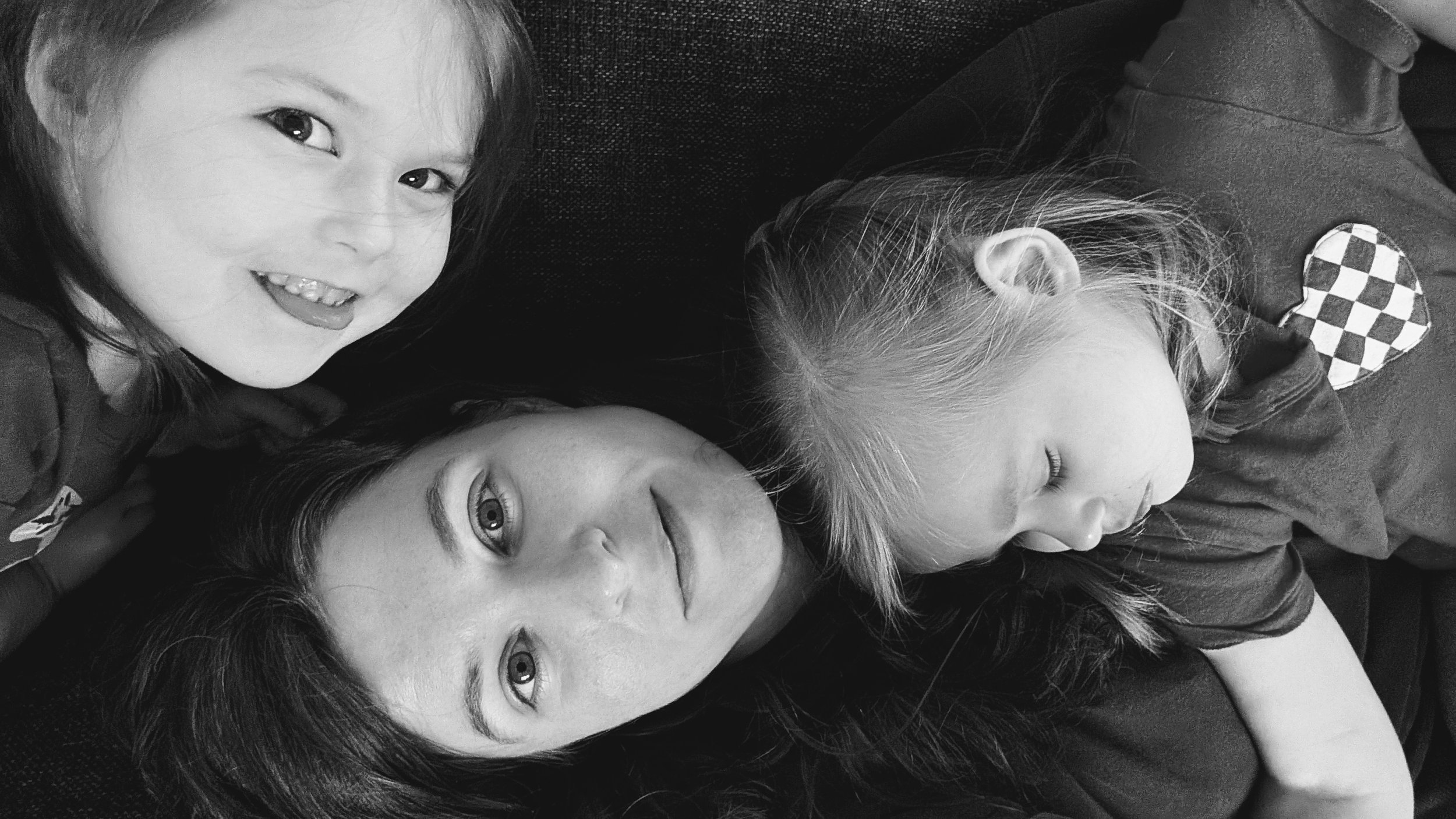
I’m a mom of two kids, and I’ve spent a lot of time over the years thinking about how kids learn and what I can do to support them along the way.
Reading became a particular interest of mine when my oldest daughter was very young. She loved books, and I had already started teaching her letters and letter sounds. That part felt pretty straightforward to me.
But then I tried to teach her how to actually read a word, and I got stuck.
I knew that C-A-T said cat. She knew the individual sounds. But how do you teach a child to take those three separate sounds and blend them together into a word?
I realized I didn't actually know.
I loved reading as a kid, but I couldn't remember learning how to do it. And as an adult, so much of reading happened automatically that I had never really thought about all the little skills involved.
So I started researching. I learned more about phonics and how kids learn to blend sounds together. I watched videos, read articles, and eventually took a course. I also became much more consistent about practicing with my daughter.
Once we got past that first hurdle, there were plenty of other moments when I had to stop and figure out what to do next. How do you move from simple three-letter words into books? What do you do when your child starts encountering phonics patterns you haven't taught yet? When are they ready for harder books?
Each time, I learned a little more, tried something, and adjusted based on how it was going.
And little by little, she learned to read.
A couple of years later, I got to do the whole thing again with my younger daughter. This time I knew a lot more. I had a better idea of what order to teach things in, what had worked well the first time, and what I wanted to do differently.
And I'm happy to say that this worked for us. My oldest daughter learned to read before she turned three, and I continued working with her as her reading skills grew. By the time she was entering kindergarten, she was reading at a third-grade level. I was so proud of her. She was choosing to read chapter books on her own because she loved to read.
My youngest just turned three and is already reading books at an early second-grade level. She's still building up her reading fluency, but she's well on her way to becoming an independent reader too.
Hi, I’m Noa Sears.
Why Reading Mattered So Much to Me
Of course, none of this would have been worth putting so much thought into if I didn't think reading was such an important skill.
Reading is the foundation for so much of what kids do in school. At first they're learning how to read, but pretty quickly they're expected to use reading to learn everything else. They need to read directions, understand a math problem, learn about science, or read a chapter about history.
That means a struggle with reading doesn't necessarily stay a struggle with reading. If it's hard for a child to understand the words on the page, it's going to be even harder for them to understand what they're supposed to be learning from those words.
And over time, I worry about what that can do to a child's confidence. A kid may start out struggling with reading, but eventually they may come away feeling like they're just not very good at school.
I knew that a lot of kids in the U.S. struggle with reading, and I wanted my daughters to go into school with a really strong foundation. So when they showed me they were ready to learn, teaching them felt worth the effort. I wasn't trying to get them ahead just for the sake of being ahead. I wanted them to go into school feeling confident about reading and ready to use that skill to learn everything else.
Why I Made This Site
After teaching two kids to read, I realized I'd learned a lot that I wished someone had simply explained to me at the beginning.
How do you go from knowing letter sounds to actually reading a word? Which sounds should you teach first? When do you introduce books? What kind of books should you buy? What do you do when your child gets stuck? And how do you eventually get from sounding out “cat” to a kid who picks up a chapter book and reads it because they want to know what happens next?
None of the individual steps are particularly complicated once you understand them. But when you've never taught anyone to read before, figuring out what to do next can feel surprisingly confusing.
I'm not a teacher or a reading specialist. I'm a parent sharing what I learned from researching reading, teaching my own child, and then getting the chance to go through the process a second time.
You don't need to follow everything I did exactly. Your kid isn't my kid. Take what works for your family, change what doesn't, and move at the pace that makes sense for your child.
I just hope that by sharing what worked for our family, it will make this process a bit easier for yours.