Reading Simple Sentences
After my daughter could easily read CVC words, our next step was learning to read a sentence.
Reading sentences isn't inherently harder than reading words. But it does bring up some new challenges. Some of the basic sentence-building words have tricky phonics patterns, and others have parts we need to learn by heart.
We'll introduce these ideas one at a time, then put them together to read a complete sentence.
Sometimes, two letters team up to make a new sound. When two letters work together to make a single sound, this is called a digraph.
Here's an example: th
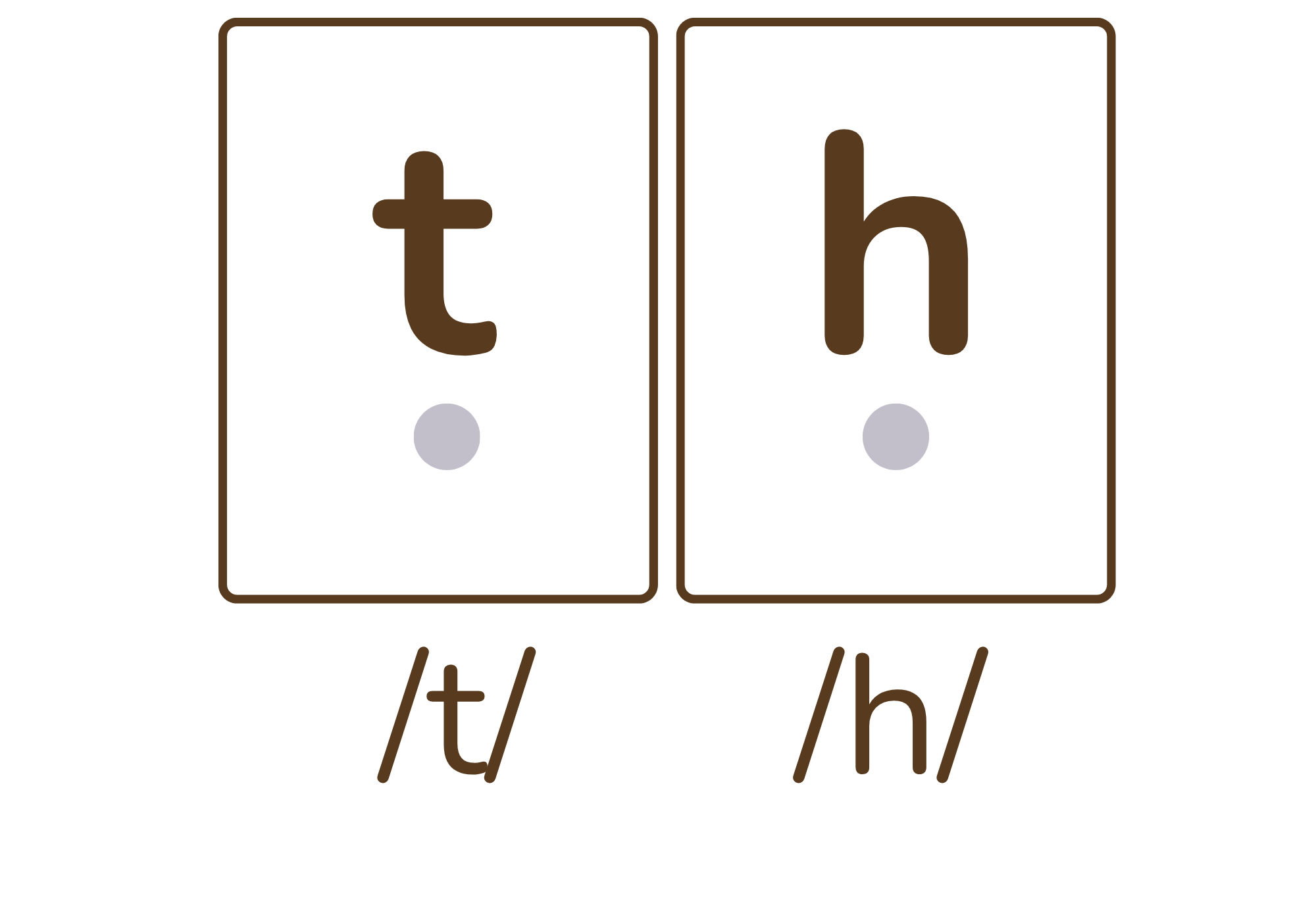
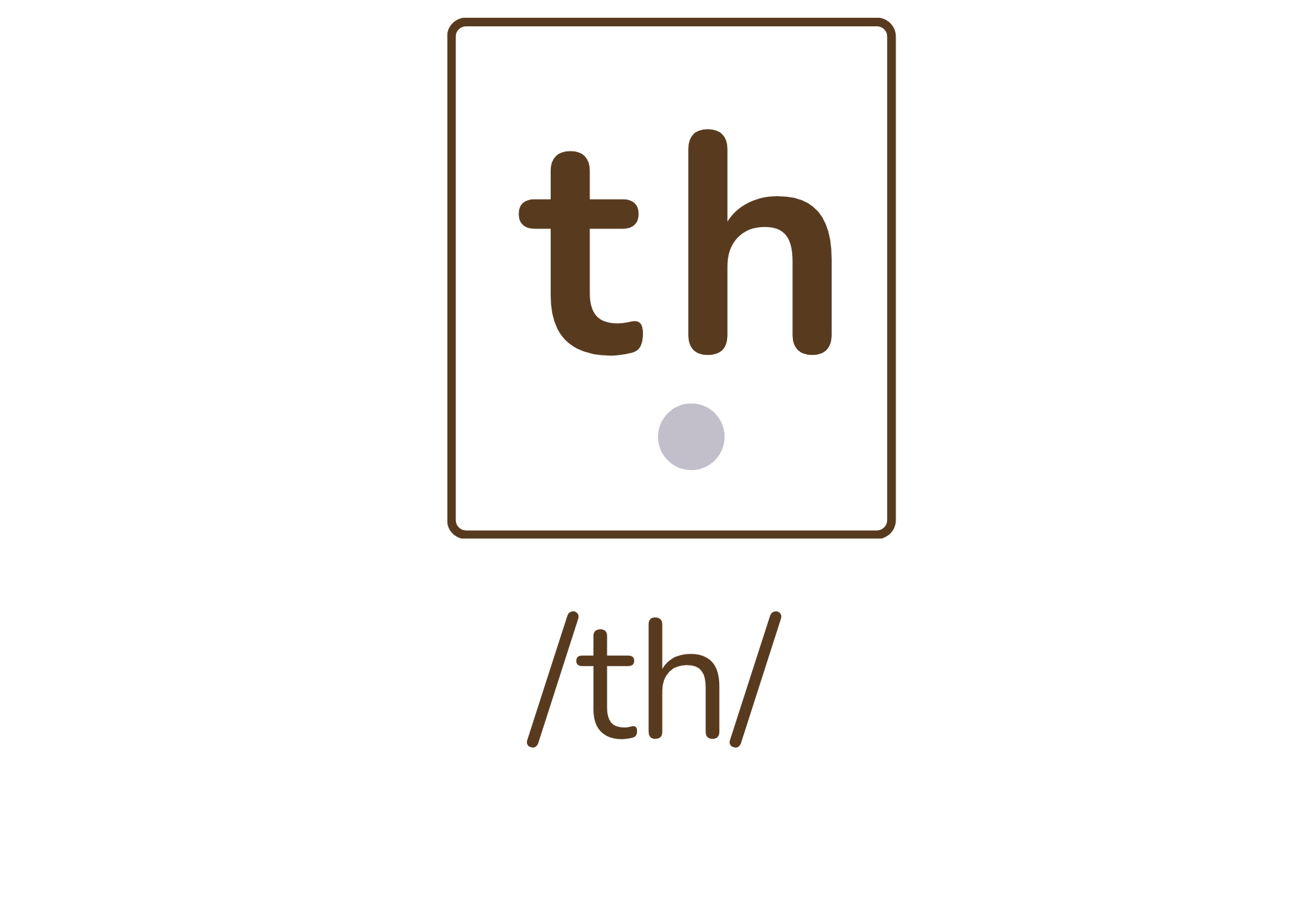
On their own, t makes the /t/ sound, and h makes the /h/ sound. But together, they make a new sound: /th/, like in that, them, this, then, and the.

START HERE
Learning New Sounds
TRY THIS FIRST



Review
Write “t” and “h” . Point to each letter, and ask your child what sound it makes:
Introduce the new sound
Now make a box around “th”
Tell your child that when these two letters are together, they make the sound /th/. Then have them repeat the sound.
Practice reading “th” words.
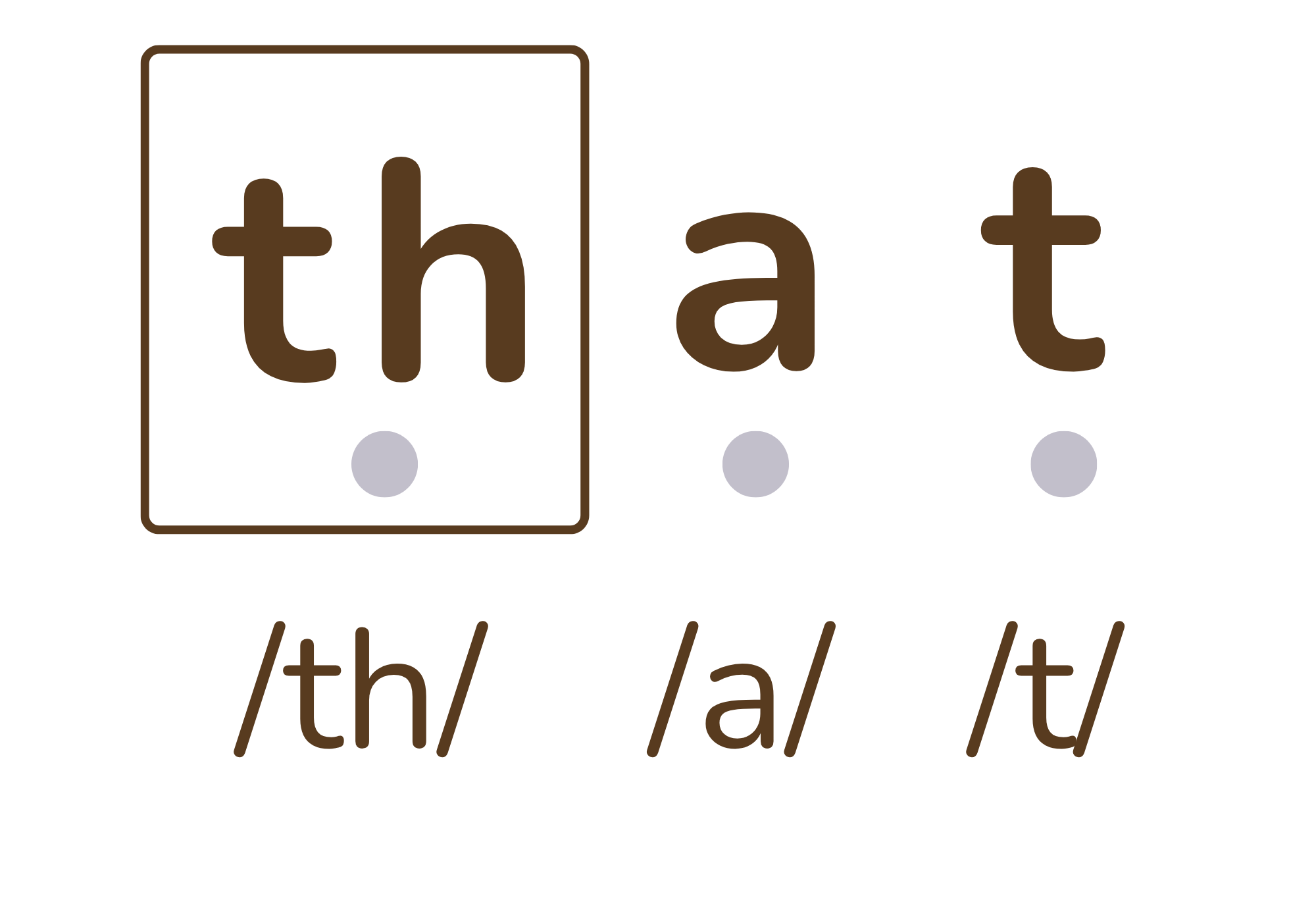
Write a few “th” words and practice sounding them out:
that, them, then, this
-
You might have noticed that th actually makes two slightly different sounds.
The first is called the voiced “th” sound. This is the sound you hear in:
that, this, they, the, them, then, other, father
The other is called the voiceless “th” sound, because it's made without vibrating your vocal cords. You can hear it in:
think, bath, teeth, three, thank
When I taught my daughters to read, I chose to introduce only the voiced “th” sound at first. I felt that teaching both sounds at once would be unnecessarily confusing.
I started with the voiced sound because it appears in some of the most useful early reading words, particularly the and they. Learning these words opens up so many possibilities for reading simple sentences.
I introduced the voiceless “th” later, once my daughters had developed more reading skills.
-
Once your child can sound out “that” and “this,” try putting them together with familiar CVC words to make short phrases:
that dog
this cat
that man
See what other little phrases you can make using “that” and “this” with CVC words.
-
What do I do if my child forgets the new sound?
Early on, when my daughter was getting used to new digraphs, she sometimes forgot them and tried to read each letter individually. That's okay. She just needed a reminder.
I'd draw a box around the two letters and remind her what sound they make together. Then we'd try sounding out the word again.
With practice, she no longer needed these reminders and could recognize the digraph on her own.

AFTER THEY’VE LEARNED “TH”
Reading Heart Words
Some words have parts that don’t make the sounds we would expect. To read these words, we need to remember the tricky part by heart and sound out the rest normally.
TRY THIS FIRST
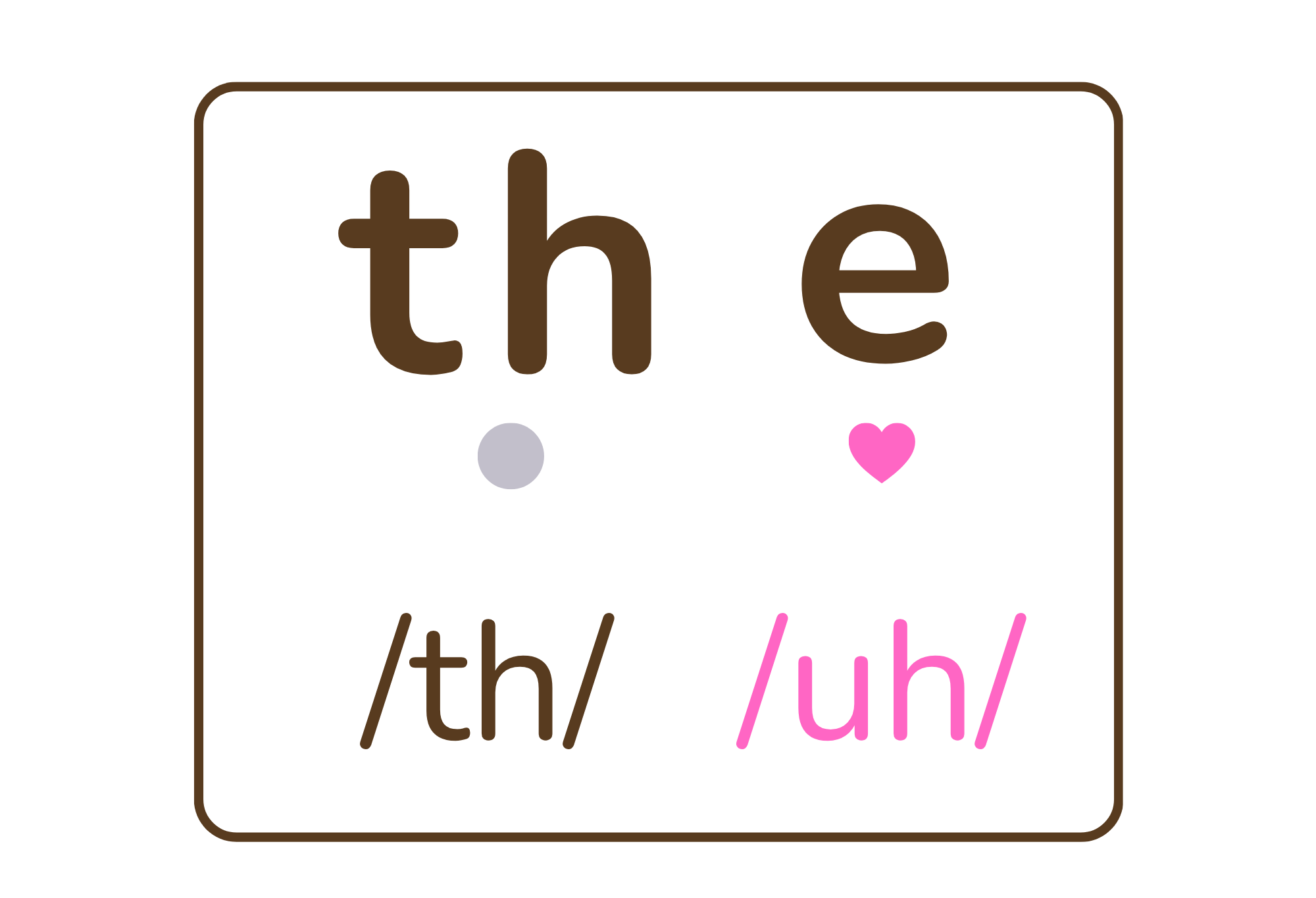
Write the word “the”
Draw a heart under the “e”
Explain that they already know the “th” sound, but in this word, the “e” makes an “uh” sound instead of the sound they would normally expect. Draw a heart beneath the “e” to help them remember. Then have them sound out the word.
Read phrases with “the”
Write a few short phrases with “the” to practice this new word:
the fox
the hat
the cup
-
When my daughter first started reading “the,” she would sound it out every time. Of course, this slowed down her reading. Ultimately, the goal was for her to see “the” and recognize it instantly, without needing to sound it out.
But sounding it out was an important part of the learning process. It helped her become familiar with the word. What she needed now was lots of practice reading it.
One simple trick that helped us was having her read “the” whenever it came up in books I was reading aloud to her. I would pause, point to the word, and ask her to read it. She often enjoyed getting to help me read.
“The” is such a common word that it appears everywhere. This gave her plenty of opportunities to practice, and before long, she was recognizing it on her own without needing to sound it out.
One small note: If I noticed she was getting bored or frustrated, I simply went back to reading the words myself. I still wanted reading together to be fun for her.
Now that your child knows how to read “the,” they have everything they need to start reading simple sentences!

AFTER THEY’VE LEARNED “THE”
Reading Their First Sentence
TRY THIS FIRST
Have your child read each line, building up to a complete sentence:

cat sat
sat on mat
the cat sat
The cat sat on the mat.
-
Reading a complete sentence takes practice! Your child may be able to sound out each word, but still find it tricky to put them all together.
Here are a few ways to help:
Take it one word at a time. Give your child time to sound out each word without rushing.
Help them keep their place. If they lose track, have them point to each word as they read.
Model fluent reading. Early readers don’t read fluidly (yet!). That’s totally normal. You can help by re-reading the sentence after they finish, so they can hear what it’s supposed to sound like.
Keep practicing. As familiar words become easier to recognize, your child will gradually be able to read sentences more smoothly.
Keep practice sessions short and encouraging. And make sure to congratulate them for their effort. Reading a whole sentence is a big accomplishment!
-
What if my child is having trouble reading a complete sentence?
It's normal for reading sentences to feel challenging at first. Your child is learning to put together several skills at once!
They can read individual words but struggle with the whole sentence. Break the sentence into shorter phrases. Let them read a few words at a time before putting everything together.
They forget the beginning of the sentence by the time they reach the end. Sounding out words takes a lot of concentration! Read the sentence aloud smoothly afterward to help them connect the words and understand the meaning.
They get stuck on a word they already know. Encourage them to sound it out again. Recognizing familiar words more quickly comes with practice.
They get frustrated or tired. Don't feel pressured to finish the activity. It's fine to stop after a few phrases and try again another day.
Remember, the goal isn't perfect fluency right away. It's helping your child become comfortable with reading words.
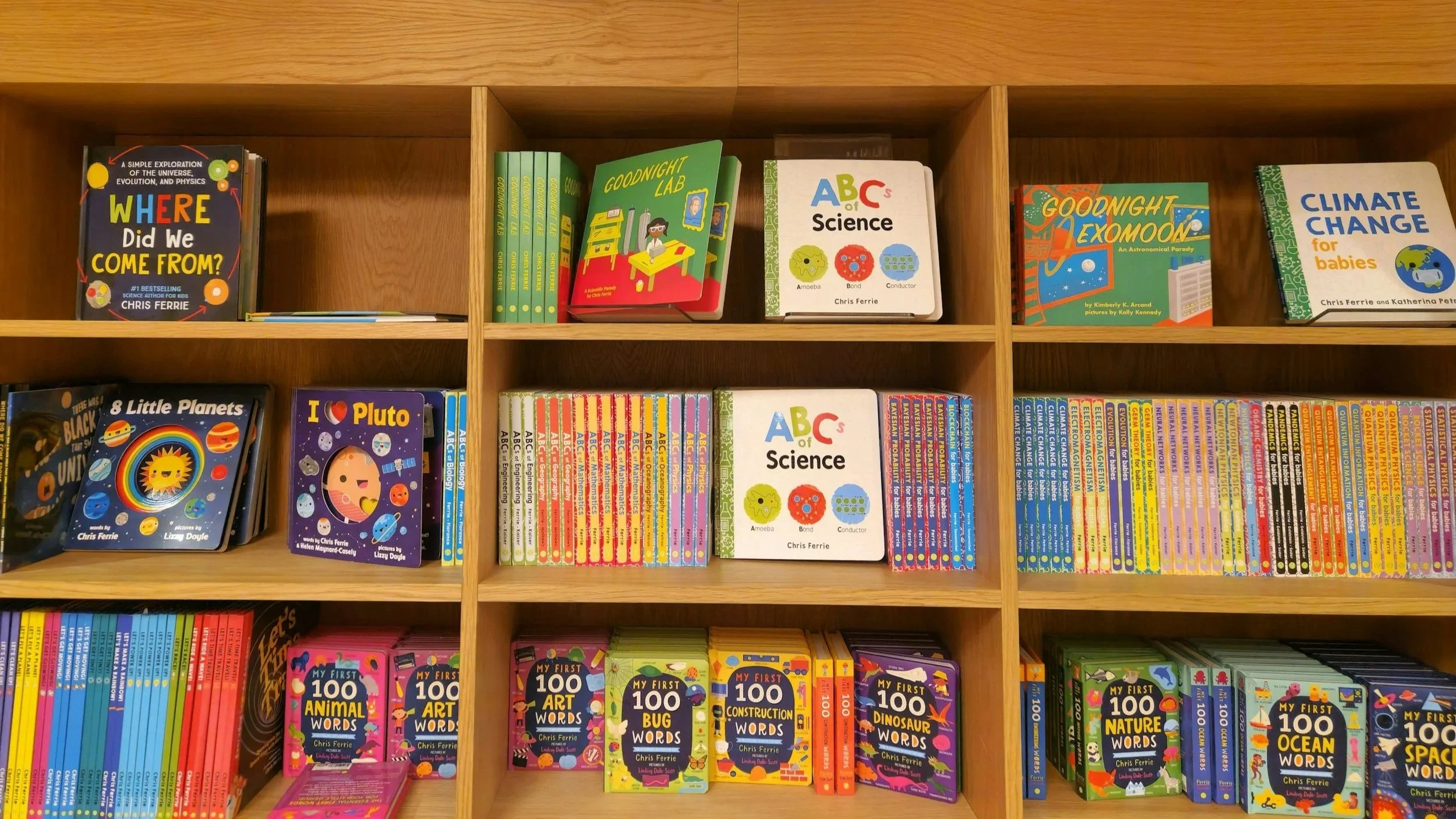
Once your child can comfortably sound out simple three-letter words, they’re ready for the really exciting part: reading their first book.
Ready for Books?
Looking for more reading resources?
I’ve put together the books, flashcards, games, and other reading tools I’ve found helpful along the way.